Generating high-quality leads is a cornerstone of any successful B2B business. But with increasing competition, expanding data sources, and complex buyer journeys, relying on manual outreach is no longer enough. Many companies are turning to automated solutions to capture, nurture, and convert leads more efficiently. In this post, we’ll explore what automated lead generation means for B2B businesses, why b2b lead generation software can transform outbound and inbound strategies, and how to make the best choice between manual and automated approaches.

What Does Automated Lead Generation Really Mean for B2B Businesses?
Automated lead generation refers to using software and tools to capture, track, and nurture potential customers without relying solely on manual processes. In the past, sales teams spent countless hours researching prospects, sending cold emails, and manually tracking follow-ups. Today, automated systems streamline these tasks, freeing sales and marketing teams to focus on strategy and relationship-building.
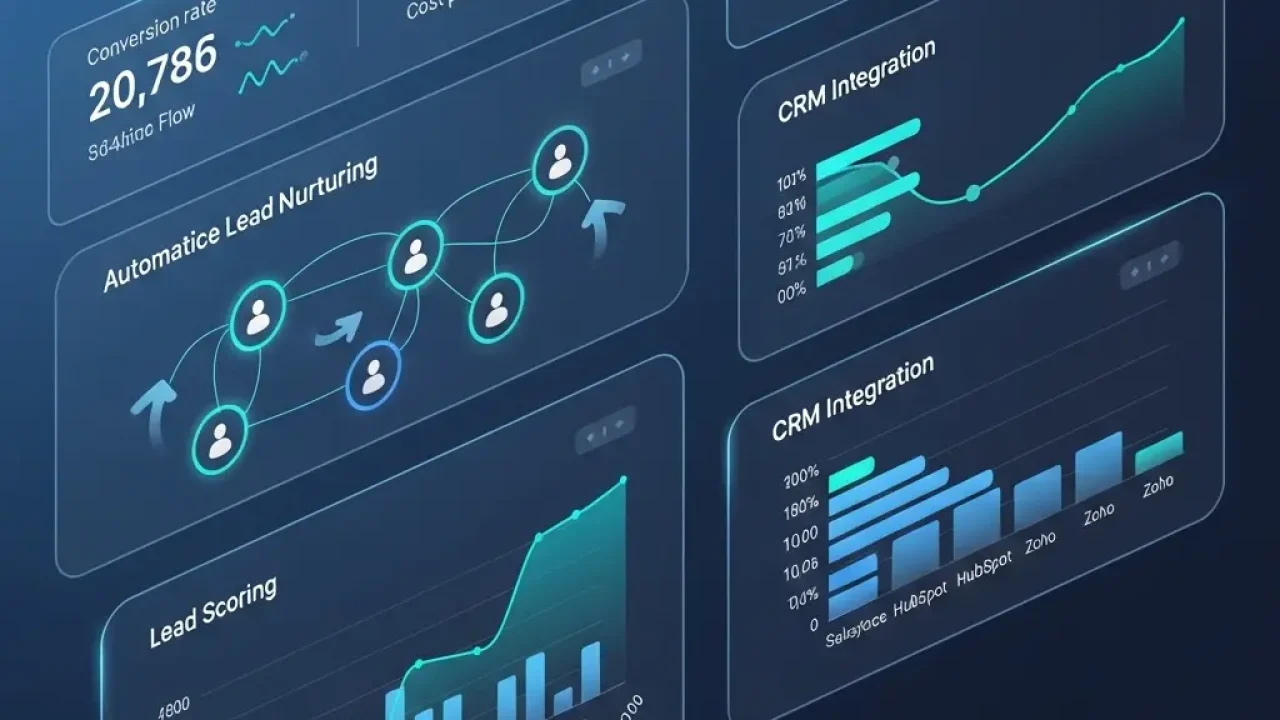
By automating repetitive tasks such as lead scoring, email campaigns, and CRM updates, B2B companies can improve efficiency and maintain consistent engagement with prospects. According to The Annuitas Group, businesses using marketing automation to nurture prospects report as much as a 451% increase in qualified leads.
How Has B2B Lead Generation Evolved Over Time?
Over the last years, B2B lead generation has shifted from cold calls and generic emails to a more strategic, data-driven approach. Previously, sales teams relied heavily on manually collected contact lists, often leading to inaccurate information and missed opportunities.
Automation tools now integrate with CRM platforms, track user behavior, and segment leads based on interest and engagement. This evolution allows businesses to target prospects more effectively, delivering the right message at the right time.
What Are the Common Challenges B2B Companies Face Today?
Even with talented sales and marketing teams, companies encounter challenges such as:
| Challenge | Description |
| Low-quality leads that rarely convert | Teams often attract leads that don’t match their ICP, resulting in wasted time and weak ROI. |
| Misaligned marketing and sales processes causing missed follow-ups | Poor communication or inconsistent workflows lead to delays, gaps, and lost opportunities. |
| High volumes of unstructured data making prospect prioritization difficult | Without proper tools, teams struggle to score, segment, and prioritize leads efficiently. |
These pain points highlight why many businesses are exploring b2b lead generation software to improve efficiency and outcomes.

Why Can B2B Lead Generation Software Transform Outbound and Inbound Strategies?
B2B lead generation software combines automation with data intelligence to enhance both outbound and inbound marketing strategies. By centralizing prospect data and automating workflows, businesses can reach the right prospects more effectively and nurture them toward conversion.
How Can Software Improve Outbound Marketing?
Outbound marketing relies on proactively reaching potential customers through emails, cold calls, or social campaigns. Software tools help by:
- Targeting prospects based on firmographics, behavior, and engagement.
- Personalizing email outreach at scale to improve open and response rates.
- Tracking campaign performance to identify the most effective messages.
In a 2021 survey of B2B companies using marketing automation, about 39% reported higher lead quality, and over one‑third reported increased leads or conversions compared with manual processes. Automation also saved time on repetitive tasks and improved alignment between marketing and sales (Zumstein, Oswald, Gasser & Lutz, 2021).
How Does Software Enhance Inbound Marketing Efforts?
Inbound marketing involves attracting leads through content, landing pages, and SEO. Automated systems can:
- Capture leads directly from website forms and landing pages.
- Score leads based on engagement and behavior.
- Nurture leads through targeted email workflows and remarketing campaigns.
This approach ensures prospects receive timely, relevant content, increasing the likelihood of conversion.

What Are the Real-World Benefits of Automation?
Implementing b2b lead generation software offers tangible benefits:
| Benefit | Description |
| Faster sales cycles | Automated follow-ups keep prospects engaged and prevent leads from falling through the cracks. |
| Higher lead quality | Lead scoring systems highlight the most promising prospects so teams can focus on high-value opportunities. |
| Better ROI | Automation saves time and resources while driving more conversions from qualified leads. |
For example, CMiC—after integrating its lead‑generation campaign with a CRM via Gartner Digital Markets—achieved a 37% lead‑to‑MQL conversion rate, demonstrating the real-world impact of better lead sourcing and qualification practices (Gartner Digital Markets, n.d.)
How Should Businesses Decide Between Manual Outreach and Automated Lead Generation Services?
While manual outreach can work for small teams or niche markets, scaling requires automation or professional services. Choosing the right solution depends on several factors.
What Key Factors Should You Consider Before Choosing a Solution?
Before investing in software or services, consider:
- Budget and resources: Can your team manage manual processes, or is automation more cost-effective?
- Integration needs: Does the software integrate with your CRM, marketing platforms, and analytics tools?
- Team capacity: Do your sales and marketing teams have time to manage manual follow-ups?
- Data quality and scalability: Does the solution provide clean, accurate leads, and can it grow wit
- h your business?
A thorough evaluation ensures your investment delivers measurable results.
What Are the Best Practices for Implementing Lead Generation Software?
Proper implementation ensures success:
| Best Practice | Description |
| Onboard and train your team | Ensure every user understands key features, workflows, and system functions. |
| Integrate with existing tools | Connect your lead gen software with CRM and marketing platforms for smooth data flow. |
| Track metrics continuously | Monitor open rates, conversions, pipeline velocity, and campaign performance. |
| Optimize workflows regularly | Use analytics insights to refine your campaigns, lead scoring rules, and nurturing sequences. |
Following these practices minimizes adoption pitfalls and maximizes ROI.
What Should You Do Next to Improve Lead Generation?
Investing in the right solution can transform your sales and marketing strategy. True P4P® offers customized automated lead generation services that integrate seamlessly with your existing systems. With our expertise, B2B companies can generate higher-quality leads, shorten sales cycles, and improve revenue outcomes.
Ready to supercharge your B2B lead generation? Schedule a personalized consultation with True P4P® today and discover how our automated lead generation software can transform your sales pipeline.

Conclusion
Automated lead generation is no longer an optional tool—it’s essential for modern B2B businesses aiming to grow efficiently and stay competitive. By understanding challenges, leveraging software for both outbound and inbound strategies, and following best practices for implementation, companies can maximize their marketing ROI and streamline their sales pipelines.
Investing in professional solutions like True P4P®’s automated lead generation services ensures your business not only keeps up with the market but also leads it.
Frequently Asked Questions (FAQ)
1. What is B2B lead generation software?
B2B lead generation software is a tool that helps businesses capture, manage, and nurture potential clients automatically. It can track prospects from initial interest to sales-ready leads, integrate with CRM systems, and automate tasks like email follow-ups and lead scoring.
2. How does automation improve lead generation?
Automation saves time on repetitive tasks, ensures leads are followed up quickly, and delivers personalized messages at scale. It helps marketing and sales teams focus on high-value activities, improves lead quality, and can increase conversions compared to fully manual processes.
3. Can small businesses benefit from automated lead generation software?
Yes. Small and mid-sized businesses often gain the most from automation because it allows a small team to manage more leads efficiently, reduce errors, and maintain consistent engagement without hiring additional staff.
4. How do I know if my company needs automated lead generation?
If your sales team struggles to follow up on leads, experiences inconsistent lead quality, or spends too much time on manual data entry, automation could significantly improve your efficiency and conversion rates.
5. What features should I look for in B2B lead generation software?
Key features include:
- Lead capture forms and landing pages
- CRM integration
- Lead scoring and prioritization
- Automated email workflows
- Analytics and reporting dashboards