
Most businesses have a sales process. Very few have a conversion system. The difference isn’t semantics — it’s the difference between revenue that depends on individual heroics and revenue that runs on infrastructure.
A sales process is a set of steps someone is supposed to follow. A conversion system is architecture that runs whether or not anyone remembers to follow the steps. One depends on memory and motivation. The other depends on automation and data.
Here’s exactly what a real conversion system looks like from the inside — and why businesses that have built one consistently outperform those that haven’t.

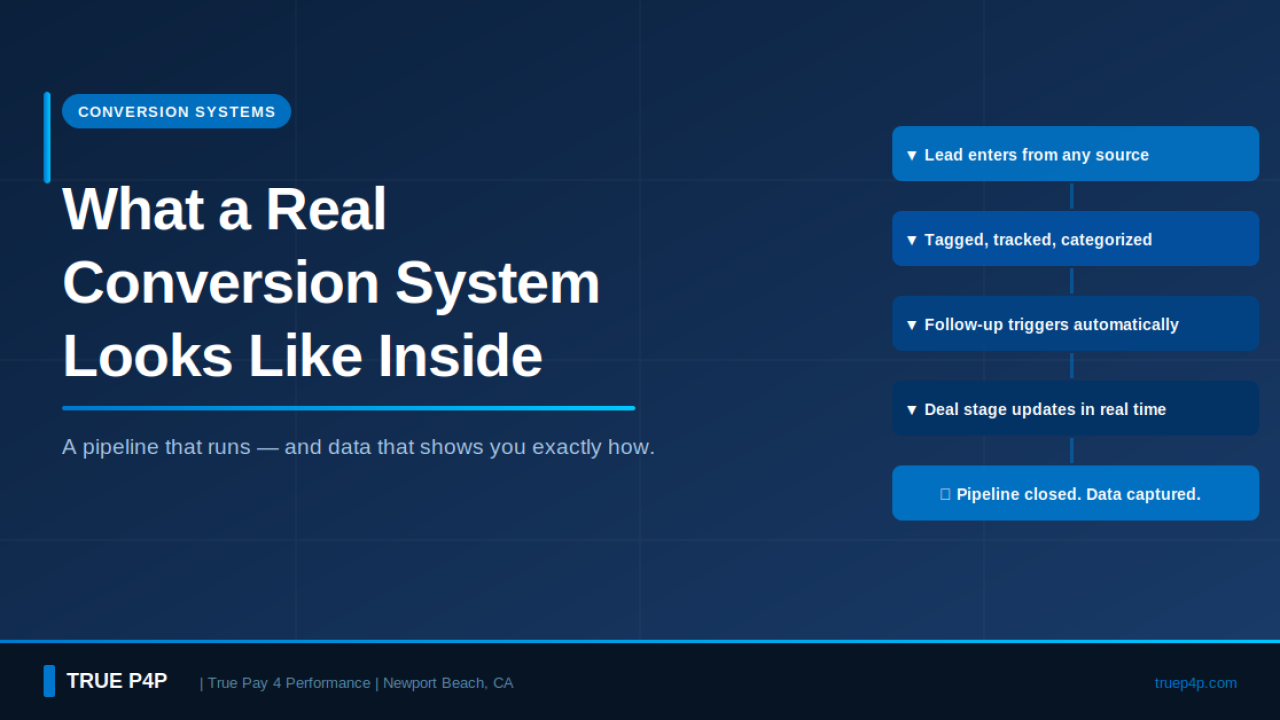
Stage 1 — Every Lead Enters One Organised System
In most businesses, leads come in from multiple sources — the website form, paid ads, referrals, social media, inbound calls — and they land in different places. Some go into a CRM. Some go into email. Some get a sticky note. Some disappear entirely.
In a real conversion system, every lead from every source flows into one centralised entry point automatically. No manual importing. No leads falling through the cracks between channels. If it came in, it’s in the system.
Stage 2 — Tagged, Tracked and Moved by Behavior
The moment a lead enters, the system goes to work. It’s tagged by source, intent signals, and engagement level. It’s assigned to the right pipeline stage automatically. And as the prospect behaves — opens emails, clicks links, visits pages, responds to messages — the system updates their profile and moves them forward.
Your team doesn’t have to decide where a lead stands. The system knows — and it shows them.
Stage 3 — Follow-Up Sequences Trigger Without Anyone Pressing a Button
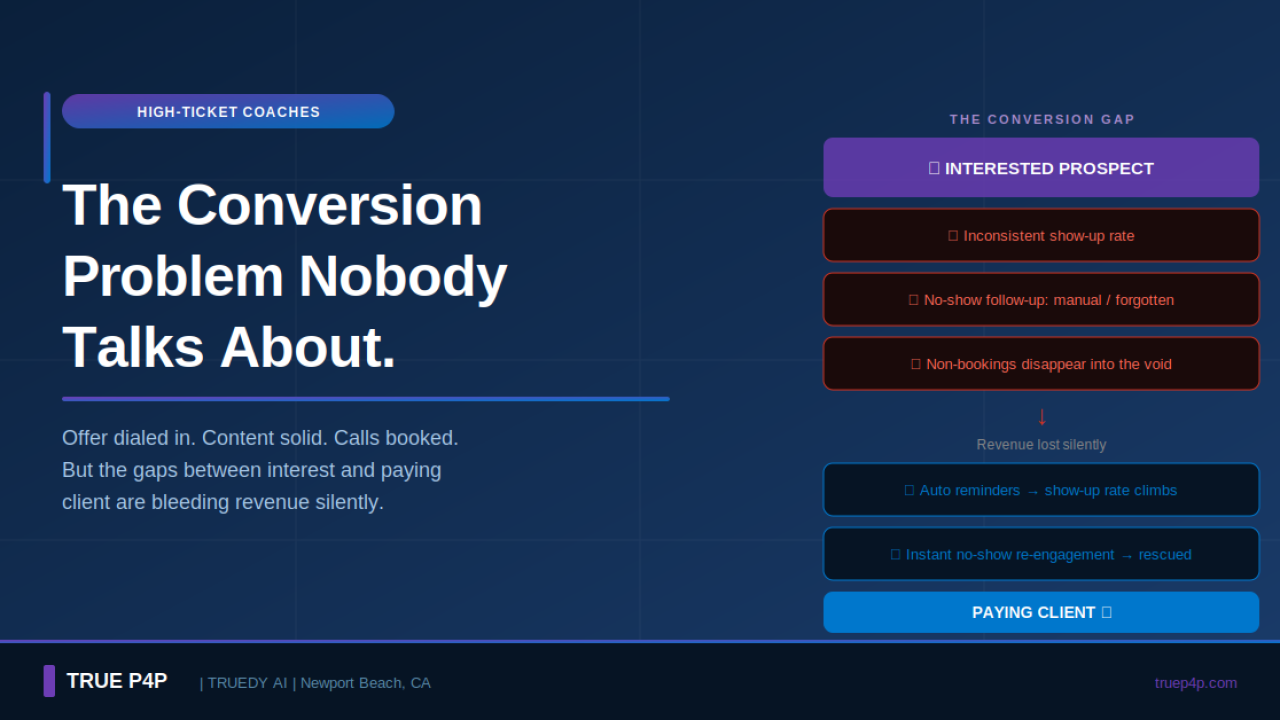
This is where most businesses lose revenue. The lead came in. The first contact was made. Then nothing — because someone got busy, forgot, or assumed someone else was handling it.
In a real conversion system, follow-up is not a task. It’s a trigger. When a lead hits a certain stage or takes a certain action, the next sequence fires automatically — email, SMS, call prompt, whatever the cadence calls for. 5 to 12 touches happen without anyone having to remember.
Without the system
“I thought you were handling that lead.” This sentence costs businesses thousands of dollars a month. It exists because follow-up lives in someone’s memory instead of in automated infrastructure.
With the system
Every lead is followed up. Every time. The sequence runs regardless of who is sick, on vacation, overwhelmed, or distracted. The pipeline doesn’t depend on a person having a good week.
Stage 4 — Deal Stages Update in Real Time
In a properly built system, every interaction updates the deal stage automatically. A prospect books a call — they move to “qualified.” A proposal is sent — they move to “proposal stage.” An email goes unanswered for 7 days — they get flagged for re-engagement. Your pipeline reflects reality at all times. Not what someone remembers to update, but what is actually happening.
Stage 5 — Drop-Off Points Become Visible
This is one of the most valuable things a conversion system gives you — visibility into where your pipeline breaks. Before the system, you knew deals were being lost but couldn’t pinpoint where. After the system, you can see it clearly: 40% of leads are going cold at the proposal stage. Response rate drops after the third follow-up. Leads from Google Ads convert at half the rate of referrals.
Once you can see the leaks, you can fix them. And fixing one leak in your pipeline is often worth more than doubling your ad spend.
Stage 6 — A Pipeline That Runs and Data That Proves It
The end state of a real conversion system isn’t just more closed deals — though that happens. It’s clarity. You know exactly how many leads came in, where they came from, how they moved through the pipeline, where they stalled, and what they converted at. Revenue becomes manageable — not a mystery.

Share this on LinkedIn →
This Is What True P4P® Builds
At True P4P®, we don’t just advise on systems — we build them. We audit your current pipeline, identify where leads are dying, design the automated architecture that catches them, and implement it end to end.
The result is a pipeline that runs without constant management — and data that shows you exactly how it’s performing at every stage.
- Centralised lead capture — every source, one system
- Automatic tagging and routing — zero manual sorting
- Behaviour-triggered follow-up — sequences that fire themselves
- Real-time deal stage tracking — always accurate, always visible
- Drop-off analytics — find the leaks and fix them
- Full performance reporting — know exactly what’s working
KEY TAKEAWAY
A sales process depends on people remembering to follow it. A conversion system runs whether they do or not. That’s the difference between revenue that’s consistent and revenue that’s unpredictable.
See what a real conversion system could do for your pipeline.