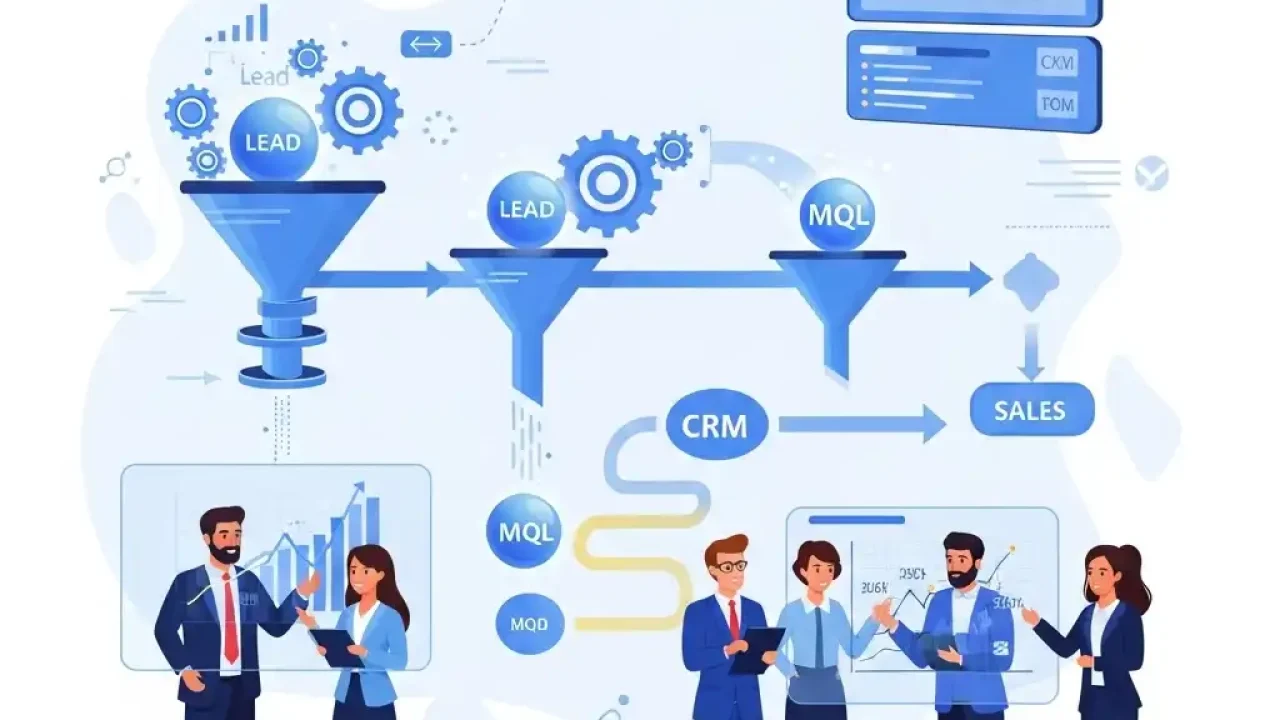

The best way to generate B2B leads isn’t by adding more tools or platforms—it’s by shifting your approach from collecting contacts to converting real decision makers.
Today’s B2B buyers are more informed than ever. They research independently, compare options carefully, and involve multiple stakeholders before reaching out to a vendor. Gartner (2023) reports that B2B buyers spend only 17% of their total buying journey engaging directly with suppliers. The rest happens long before a sales conversation begins.
This shift has exposed a major gap in how many companies approach lead generation. More traffic does not mean more revenue. More leads do not mean better opportunities. What matters is intent.
This article breaks down the most common B2B lead generation mistakes, explains the best way to generate B2B leads through conversion-focused funnels, and shows how high-intent decision makers can be reached more effectively.
Mistake #1: Focusing on Lead Quantity Instead of Lead Quality
A high lead count may look impressive in dashboards, but sales teams feel the real impact. When leads are unqualified, follow-ups stall, pipelines slow down, and confidence in marketing drops.
According to HubSpot (2024), 61% of marketers say generating high-quality leads is their biggest challenge. The issue is rarely demand. It is relevance.
Low-quality leads often:
- Lack buying authority
- Are early in research mode
- Have no defined budget or timeline
Prioritizing lead quality over volume is essential for predictable growth.

Mistake #2: Sending All Traffic to Generic Landing Pages
Many B2B companies direct every campaign to the same landing page, regardless of who the visitor is or what problem they are trying to solve.
Decision makers respond to messages that speak directly to:
- Their role
- Their priorities
- Their business risk
A CFO, marketing director, and operations manager do not convert for the same reasons. When messaging is generic, conversion rates suffer.
Conversion-focused lead generation requires segmentation, personalization, and clarity at every touchpoint.
Mistake #3: Poor Alignment Between Marketing and Sales
When marketing and sales teams define a “qualified lead” differently, performance breaks down.
Common signs include:
- Sales teams ignoring marketing leads
- Marketing teams over-reporting success
- No shared performance metrics
LinkedIn (2023) found that companies with strong sales and marketing alignment achieve up to 36% higher customer retention and better deal velocity. Alignment is not a process—it is a system decision.
Mistake #4: Paying for Campaign Activity Instead of Results
Traditional agency models focus on execution:
- Ad management
- Content production
- Monthly retainers
What they often lack is accountability tied to outcomes. If leads fail to convert, the client still absorbs the cost.
This is where performance-based marketing creates a clear advantage by aligning incentives with results.

The Best Way to Generate B2B Leads Through Conversion-Focused Funnels
The best way to generate B2B leads is not by increasing traffic, but by guiding the right buyers through a structured decision path.
Conversion-focused funnels are designed to:
- Attract high-intent audiences
- Filter prospects through qualification steps
- Deliver only sales-ready leads
Instead of optimizing for clicks or form fills, these funnels optimize for meaningful conversations.
Why Funnels Outperform Standalone Campaigns
Standalone campaigns operate in isolation. Funnels work as systems.
A well-structured funnel:
- Reduces cost per lead
- Improves lead-to-opportunity ratios
- Shortens sales cycles
According to Demand Gen Report (2023), 67% of B2B buyers rely more on digital content and online experiences to evaluate vendors before contacting sales. Funnels support how buyers actually behave.
Core Elements of High-Performing B2B Funnels
Effective conversion-focused funnels include:
- Intent-based traffic sources
- Role-specific landing pages
- Progressive lead qualification
- Behavior-based follow-up
Each step removes friction and increases buyer confidence.
Why Performance-Based Models Deliver Better Outcomes
Performance-based marketing changes the risk equation. Agencies succeed only when clients succeed.
This approach:
- Encourages higher lead quality
- Improves transparency
- Eliminates wasted spend
For B2B companies focused on ROI, this model provides predictability without long-term commitments.
How True P4P® Targets High-Intent Decision Makers
True P4P® is built for B2B organizations that care about outcomes, not activity. Instead of selling impressions or traffic, the focus is on qualified leads with real purchase intent.
The platform uses:
- Data-driven audience targeting
- Funnel-based lead qualification
- Conversion tracking across the buyer journey
This ensures leads are not just interested, but ready to engage.
Conversion-Focused Execution That Supports Sales Teams
True P4P®’s funnel approach is designed to:
- Match messaging to buyer roles
- Validate intent before lead delivery
- Reduce time wasted on low-quality prospects
This results in higher-quality conversations and more efficient sales follow-up.
A Smarter Way to Generate B2B Leads
For B2B companies tired of paying for leads that never convert, performance-based lead generation offers a practical alternative.
By focusing on intent, accountability, and measurable outcomes, solutions like True P4P® help businesses reduce risk while improving pipeline quality.
It is not about more leads. It is about better leads.
Frequently Asked Questions (FAQ)
What is the biggest mistake B2B companies make with lead generation?
The biggest mistake is focusing on lead quantity instead of lead quality. Many companies generate a high number of leads, but most lack buying authority, intent, or budget. This wastes sales time and slows revenue growth.
What is the best way to generate B2B leads today?
The best way to generate B2B leads is through conversion-focused funnels that attract high-intent audiences, qualify prospects, and deliver sales-ready leads. This approach prioritizes intent and outcomes over traffic volume.
Why do many B2B leads fail to convert into sales?
B2B leads often fail to convert because they are not properly qualified. Common issues include weak targeting, generic messaging, and poor alignment between marketing and sales on what defines a qualified lead.
How are conversion-focused funnels different from traditional campaigns?
Traditional campaigns focus on clicks or form submissions. Conversion-focused funnels guide buyers through a structured decision path, using role-specific messaging, qualification steps, and behavior tracking to ensure leads are ready to engage with sales.
What does performance-based lead generation mean?
Performance-based lead generation means paying for results, not activity. Instead of paying retainers or fees regardless of outcome, companies only pay when qualified leads or agreed performance metrics are delivered.
How does True P4P® ensure lead quality?
True P4P® uses data-driven targeting, funnel-based qualification, and conversion tracking across the buyer journey. This process helps filter out low-intent prospects before leads are delivered to sales teams.
Is performance-based marketing suitable for all B2B companies?
Performance-based marketing is best suited for B2B companies that value measurable ROI, have a defined target audience, and want predictable lead quality. It is especially effective for businesses focused on growth efficiency rather than lead volume.
Why is intent more important than traffic in B2B lead generation?
Traffic shows visibility, but intent shows readiness to buy. High-intent leads are more likely to convert into sales conversations, making intent a stronger indicator of revenue potential than traffic alone.