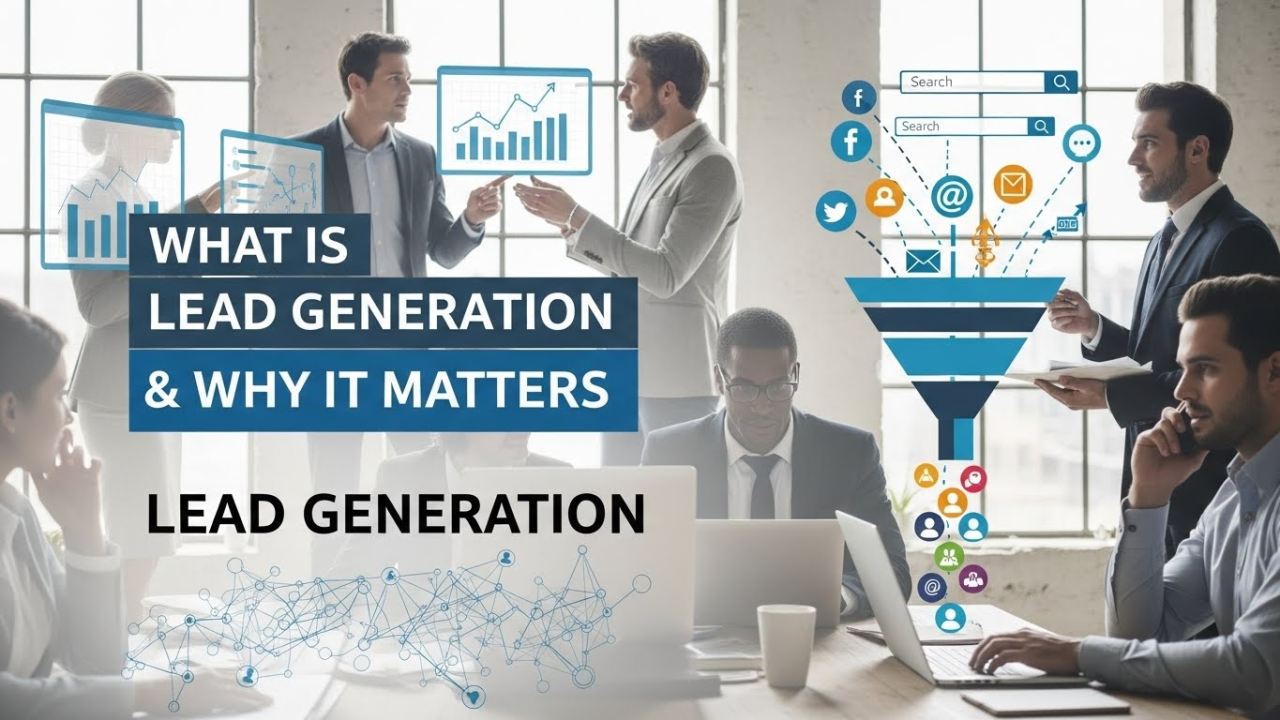
In 2026, AI lead generation is not just a marketing task — it’s the engine that keeps B2B companies growing. Buyers today no longer wait for sales calls. They search online, read product info, compare solutions, and decide what they want before ever speaking to a salesperson. If your company isn’t capturing the attention of potential customers early and nurturing them through the buyer journey, you’re leaving revenue on the table.
AI Lead generation is the practice of attracting potential customers, capturing their interest, and guiding them through a structured sales funnel so they become qualified prospects. When done right, it fills your sales pipeline with leads that are more likely to convert. That means lower acquisition costs, shorter sales cycles, and more predictable revenue growth.
What Is AI Lead Generation?
Lead generation includes all the activities your business uses to identify people or companies that might buy your offering and collect their contact information or signals that show interest in your solution. This can include:
- Forms and landing pages
- Email subscription lists
- Gated content like ebooks or guides
- AI chatbots and conversational bots
- Social ads and search ads
Once leads are captured, tools like lead scoring help your team decide which ones are most likely to buy. Lead scoring assigns a value to leads based on engagement, behavior, firmographics, and buying signals. This helps separate casual interest from real intent and ensures sales teams spend time on prospects with the highest likelihood to convert.
AI Lead generation is part of demand generation, a broader strategy focused on awareness, interest, and engagement early in the buyer journey.
Why AI Lead Generation Is Critical in 2026

Buyers Do Most of Their Research Before Talking to Sales
B2B buyer behavior has changed dramatically. A large majority of buying interactions now happen online. According to industry research, about 80% of B2B engagements occur digitally, meaning buyers research products, read content, and compare options before ever interacting with a salesperson. (Franetic)
Modern buyers expect useful, credible information before they share their contact info or agree to a call. If your AI lead generation doesn’t match this behavior, prospects may leave your site before you ever get a chance to engage them.
What Makes a High‑Quality Lead?
Not all leads are equal. A qualified lead is someone who has a strong fit for your product and shows real interest in buying. Focusing on quality is more valuable than just getting a long list of names. In fact, 91% of marketers say lead generation is their top priority because it directly impacts pipeline growth and revenue. (Pepper Insight)
High‑quality leads are driven by things like:
- Intent signals — such as content downloads, repeat website visits, or webinar attendance
- Engagement behavior — like time spent on product pages
- Firmographics and ICP fit — whether the prospect’s company matches your ideal customer profile
Tools that use AI marketing automation and predictive analytics make lead scoring more accurate, helping teams focus on leads that are most likely to convert.
How AI Is Transforming Lead Generation

Artificial intelligence (AI) has become a key part of B2B AI lead generation. AI helps companies sift through data and find patterns that humans might miss. For example:
- AI can increase conversion rates by identifying leads most likely to buy. (Growleads)
- Predictive analytics help teams focus on prospects with the strongest potential to convert. (SuperAGI)
In practice, this means companies can automate lead qualification, rank leads based on buyer intent, and personalize outreach at scale. AI also enables teams to analyze signals like website behavior, email engagement, and social interactions to decide which leads need attention now vs. later.
How AI Lead Generation Works: Core Components

Demand Capture Across Multiple Channels
AI Lead generation today isn’t a single tactic — it’s an ecosystem of activities that work together to attract and convert prospects. This includes:
- Organic search and content marketing – Content such as blogs, guides, and case studies help prospects find you when they are researching solutions.
- SEO‑optimized landing pages – Pages designed to capture lead info in exchange for valuable resources.
- Paid search and retargeting ads – Targeted ads that reach buyers showing interest in your category.
- Social media engagement – Channels like LinkedIn are especially powerful for B2B lead gen.
- Email marketing and nurture sequences – Automated emails that guide leads down the funnel.
- Chatbots and conversational AI – Engage visitors instantly and capture information in real time.
Research shows that 73% of B2B buyers read content before they make purchase decisions, highlighting how content and demand capture work together to drive leads. (Reach Marketing)
Integration with CRM for Better Lead Management
A CRM (Customer Relationship Management) system is where leads become actionable pipeline opportunities. When your AI lead generation tools connect with your CRM, it allows:
- Real‑time lead scoring
- Automated nurture sequences
- Alerts for high‑intent prospects
- Better alignment between sales and marketing
When teams share the same data and insights, they can move leads through the funnel faster and with greater accuracy.
Lead Scoring & Prioritization
Lead scoring ranks leads based on how likely they are to convert. Predictive scoring, often powered by AI, looks at past behavior and intent to assign a score that tells sales who to contact first. Companies using predictive models see reductions in wasted effort and improvements in pipeline efficiency. (SuperAGI)
This approach ensures that your sales team spends time with leads most likely to make a purchase, rather than chasing every contact equally.
Common AI Lead Generation Challenges

Even experienced teams face challenges, such as:
- Low‑quality leads that waste sales time
- Fragmented data across systems
- Slow lead qualification and follow‑up
- Poor targeting and personalization
Solving these requires investment in tools, efficient workflows, and alignment across sales and marketing teams.
Benefits of Strong Lead Generation
A solid lead generation strategy delivers:
- Higher conversion rates: More of your sales pipeline becomes genuine opportunities.
- Lower customer acquisition cost (CAC): You spend less on irrelevant audiences.
- Shorter sales cycles: Qualified leads move faster through your funnel.
- Better forecasting: Consistent lead flow makes revenue more predictable.
When you combine quality content, smart lead scoring, and tools like CRM integration, you create a scalable lead generation system that supports long‑term growth.
How True P4P Helps B2B Teams Win in 2026
At True P4P, we understand that strong lead generation isn’t just about gathering names — it’s about building predictable pipelines filled with high‑quality, conversion‑ready leads. Our approach focuses on measurable results and real business impact.
Here’s how we help:
- Performance‑based lead generation: You pay only when we deliver measurable results that improve your pipeline.
- AI‑integrated strategies: We use predictive analytics and automation to identify and nurture high‑intent audiences.
- Multi‑channel demand capture: From LinkedIn and SEO to paid search and email, we help your brand meet buyers where they research.
- Transparent reporting: Real‑time dashboards show where your lead quality and pipeline value are coming from.
With True P4P, you avoid guessing which leads matter and instead get consistent, qualified prospects that fill your funnel with purpose.
Conclusion
Lead generation in 2026 is not just about collecting names on a form — it’s about understanding modern buyer behavior, capturing real intent early, and nurturing prospects with relevant, data‑driven outreach. A strong lead generation engine fills your sales pipeline with qualified leads, reduces wasted effort, and fuels revenue growth.
By combining content strategy, predictive analytics, AI‑driven workflows, and CRM integration, B2B teams can build a scalable system that keeps revenue rising — not stalling.
Frequently Asked Questions
- What is lead generation?
- Lead generation is the process of attracting and capturing potential customer interest so prospects can be nurtured toward a purchase.
- How does AI improve lead generation?
- AI helps score leads, prioritize high‑intent prospects, and automate repetitive tasks so teams can focus on closing deals.
- Why is lead quality more important than volume?
- High‑quality leads are more likely to convert, helping your sales team spend time on opportunities that matter most.
- How soon can I see results?
- With a strong strategy and proper tools, measurable improvements in lead quality and pipeline velocity can show up within weeks.